What Makes a Good Small Business Website? 7 Things Yours Needs to Have
There's a big difference between a website that exists and a website that works. Plenty of small businesses have the former — a few pages online, a phone number, maybe some photos — but not the latter. A website that actually brings in customers, builds trust, and earns its keep.
So what separates the two? After building websites for small businesses across the UK, I've found the same things come up again and again. Here are the seven essentials every good small business website needs to have.
1. A clear, confident first impression
You have about three seconds before a visitor decides whether to stay or leave. That means the top of your homepage — what people see before they scroll — needs to do a lot of work very quickly.
It should tell the visitor: what you do, who you do it for, and why they should care. Not a clever tagline. Not a welcome message. A clear, direct statement of what your business offers and why it matters to the person reading it.
"Professional landscaping services for homes and businesses across East Sussex" is more effective than "Welcome to Green Spaces — where beauty meets nature." One answers the question; the other makes the visitor do the work.
2. A design that works on mobile
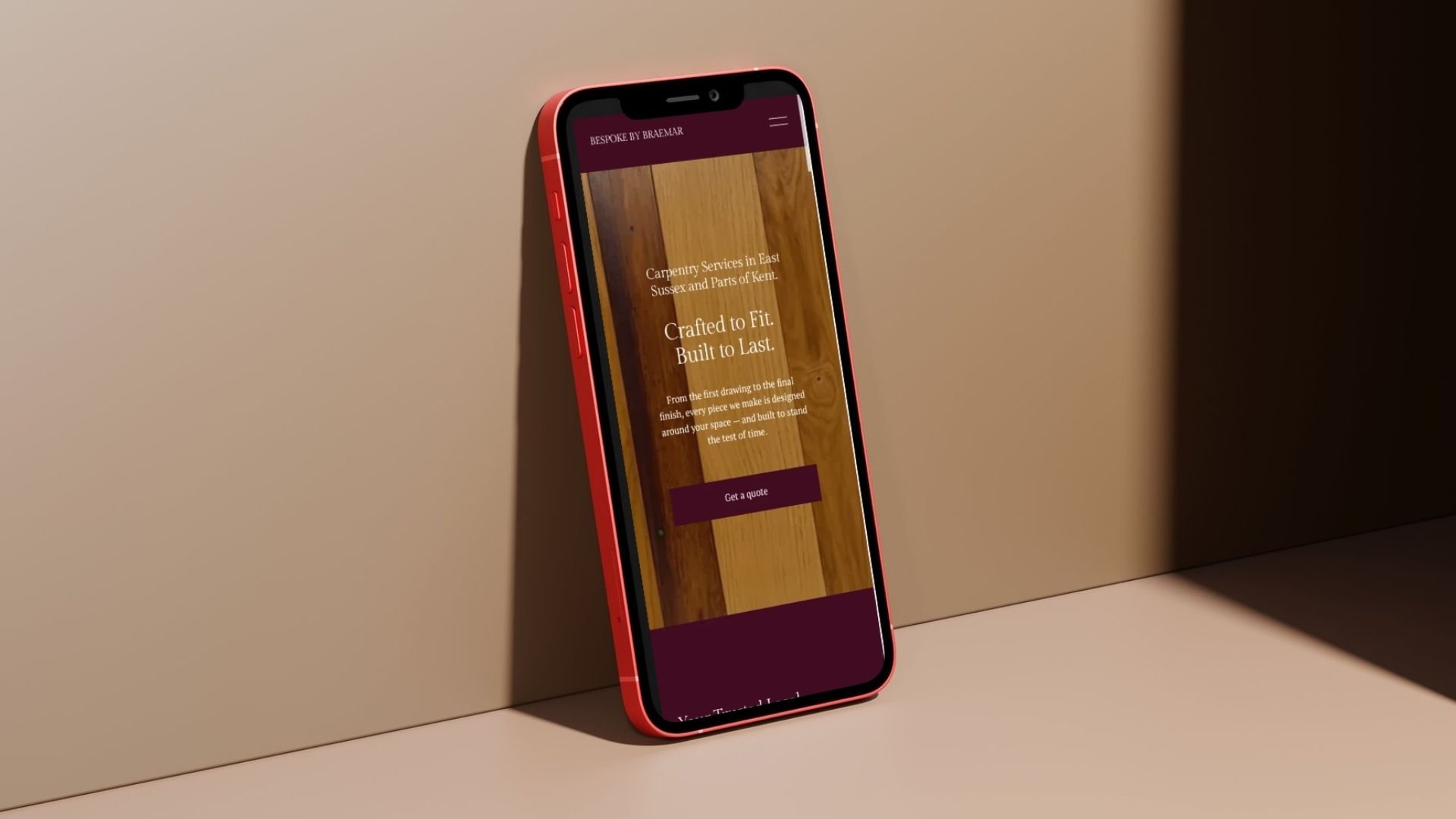
More than 60% of website traffic now comes from mobile devices. If your website doesn't look and work perfectly on a phone — text that's too small, buttons that are too close together, images that don't load correctly — you are losing customers every day.
Mobile responsiveness isn't a nice-to-have feature. It's the baseline. Any website built in the last five years should be mobile-friendly as a matter of course. If yours isn't, it almost certainly needs rebuilding rather than patching.
Google also uses mobile performance as a ranking factor. A site that performs poorly on mobile will be pushed down the search results, regardless of how good it looks on a desktop.
3. Fast page load times
People are impatient online. Research consistently shows that visitors will abandon a website that takes more than three seconds to load. That's not three minutes — three seconds.
A slow website doesn't just lose visitors; it loses Google rankings. Page speed is a confirmed ranking factor, and a slow site will struggle to appear prominently in search results no matter how good the rest of the SEO is.
Images are the most common culprit. Uploading a photograph straight from your phone or camera without compressing it first is one of the easiest ways to slow a website down dramatically. Good web design handles this properly from the start.
4. SEO built in from the ground up
A website that no one can find is just an expensive business card. Search engine optimisation — the process of making sure Google understands your site and shows it to the right people — needs to be baked in from the start, not bolted on as an afterthought.
At a minimum, every page on your website should have:
– A unique, descriptive page title that includes relevant keywords
– A meta description that summarises the page clearly
– Headings that structure the content logically
– Content that naturally mentions your services, location, and the kind of customer you serve
For local businesses, this also means making sure your name, address, and phone number are consistent across your website and your Google Business Profile — a small thing that makes a real difference to how you appear in local search results.

5. A clear call to action on every page
Every page of your website should know what it wants the visitor to do next. Usually that's contact you, call you, or book something. If a visitor reaches the bottom of a page and there's no obvious next step, many of them will simply leave.
A call to action doesn't need to be pushy. It just needs to be there. A simple button that says "Get a free quote" or "Book a consultation" at the end of every page, and somewhere visible at the top of your homepage, is enough.
The best small business websites make contacting you feel easy and obvious. Remove every barrier between a visitor and the moment they decide to get in touch.
6. Legal pages and compliance
This is the one most people forget — and it's not optional. Any business website operating in the UK is required by law to have certain things in place:
– A Privacy Policy explaining what data you collect and how you use it
– A Cookie Notice and consent mechanism if you use analytics or tracking cookies
– Terms and Conditions covering how the website may be used
Beyond legal pages, your website should be served over HTTPS (the padlock in the browser bar), which protects your visitors' data and is also a minor Google ranking signal. Most hosting providers include this for free — but it needs to be switched on.
Neglecting compliance won't necessarily cause immediate problems, but it leaves you exposed. It also sends a subtle signal to customers that you're not entirely on top of things. Get it right from the start.
7. A way to measure what's working
A website without analytics is a car without a dashboard. You're driving blind.
Google Analytics 4 is free, relatively straightforward to set up, and tells you everything you need to know: how many people are visiting, which pages they're reading, how they found you, and what device they're on. That information is genuinely useful for making decisions about your business and your marketing.
Google Search Console is equally important — it shows you which search terms your site is appearing for, which pages Google is indexing, and whether there are any technical issues you should know about. Again, free.
Both should be set up before your website goes live, not months later when you realise you have no idea what's been happening.
The honest question
How many of these seven things does your current website have? If the answer is fewer than five, there's a good chance your website is costing you customers rather than bringing them in.
The good news is that none of this is complicated to get right — with the right build from the start, all seven come as standard.
Want a website that ticks all seven? Let's talk. Free consultation, no obligation.
Book your free consultation via the contact form— no obligation, no jargon, just an honest conversation.
This post was written with the assistance of AI